Show video
Galfan coated
3mm (10g)
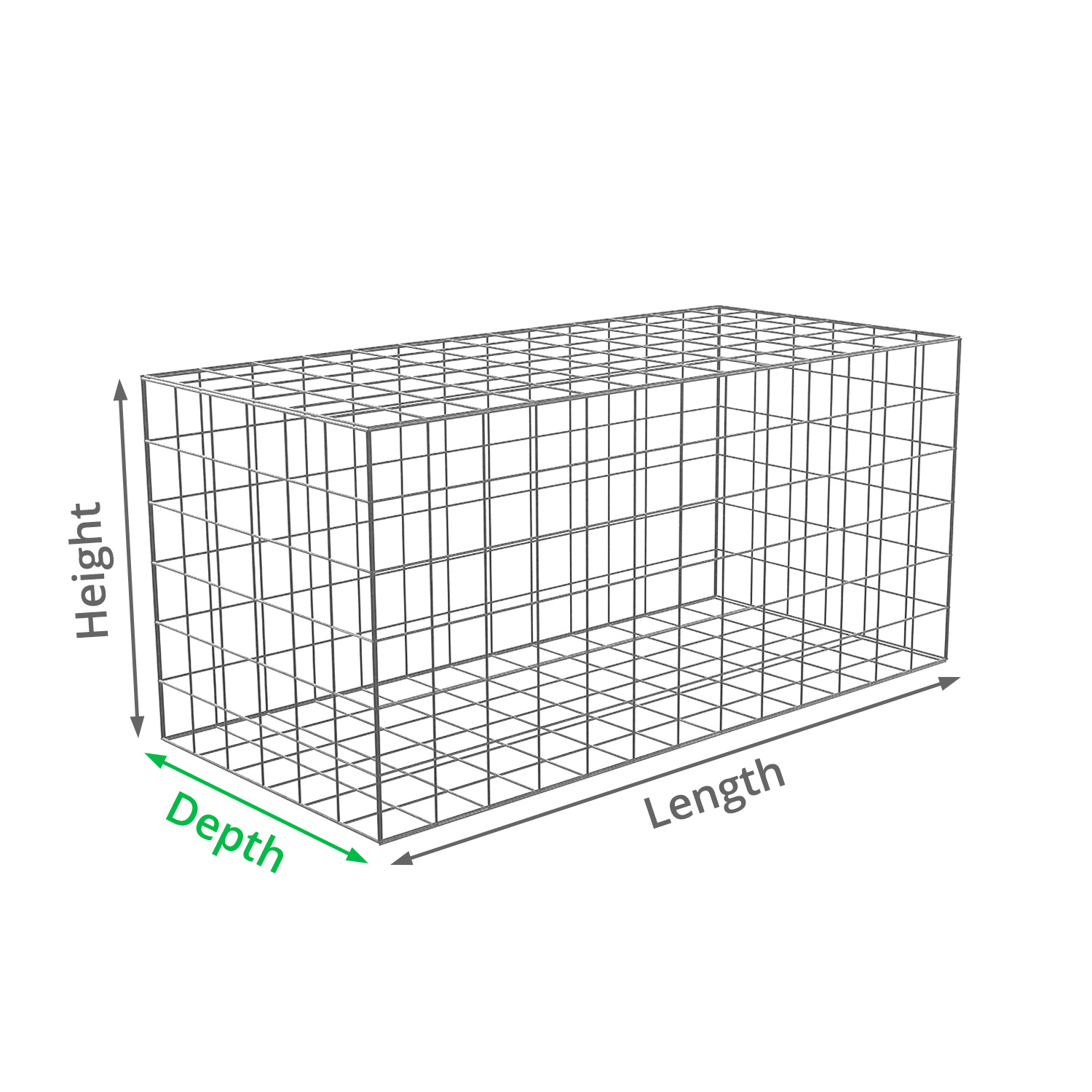
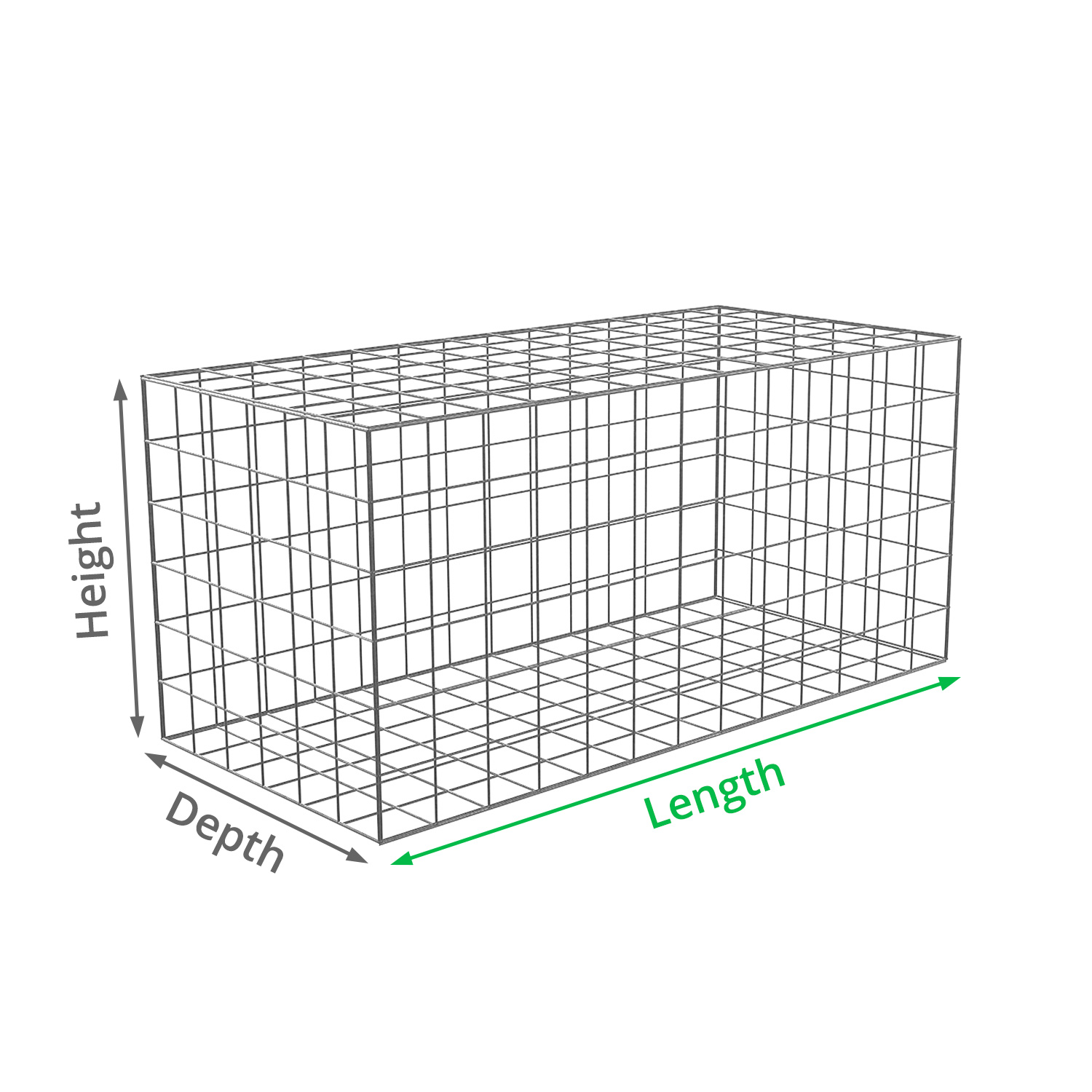
45cm
45cm
45cm
£15.99 inc. VAT



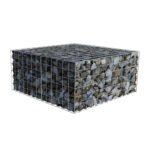
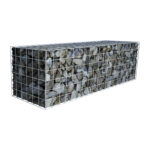
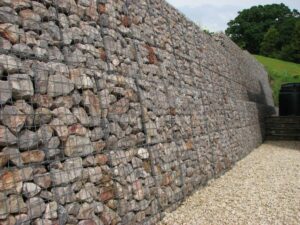
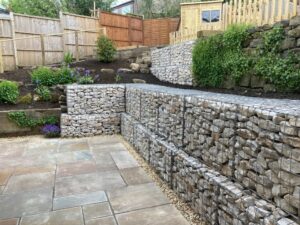
Heavy-duty gabion baskets and stone cages for garden retaining walls, earth banks, and UK trade jobs. Custom-cut to BS EN standards in Burton-on-Trent. Trade Quotes Welcome



| SELECT WIRE DIAMETER | |
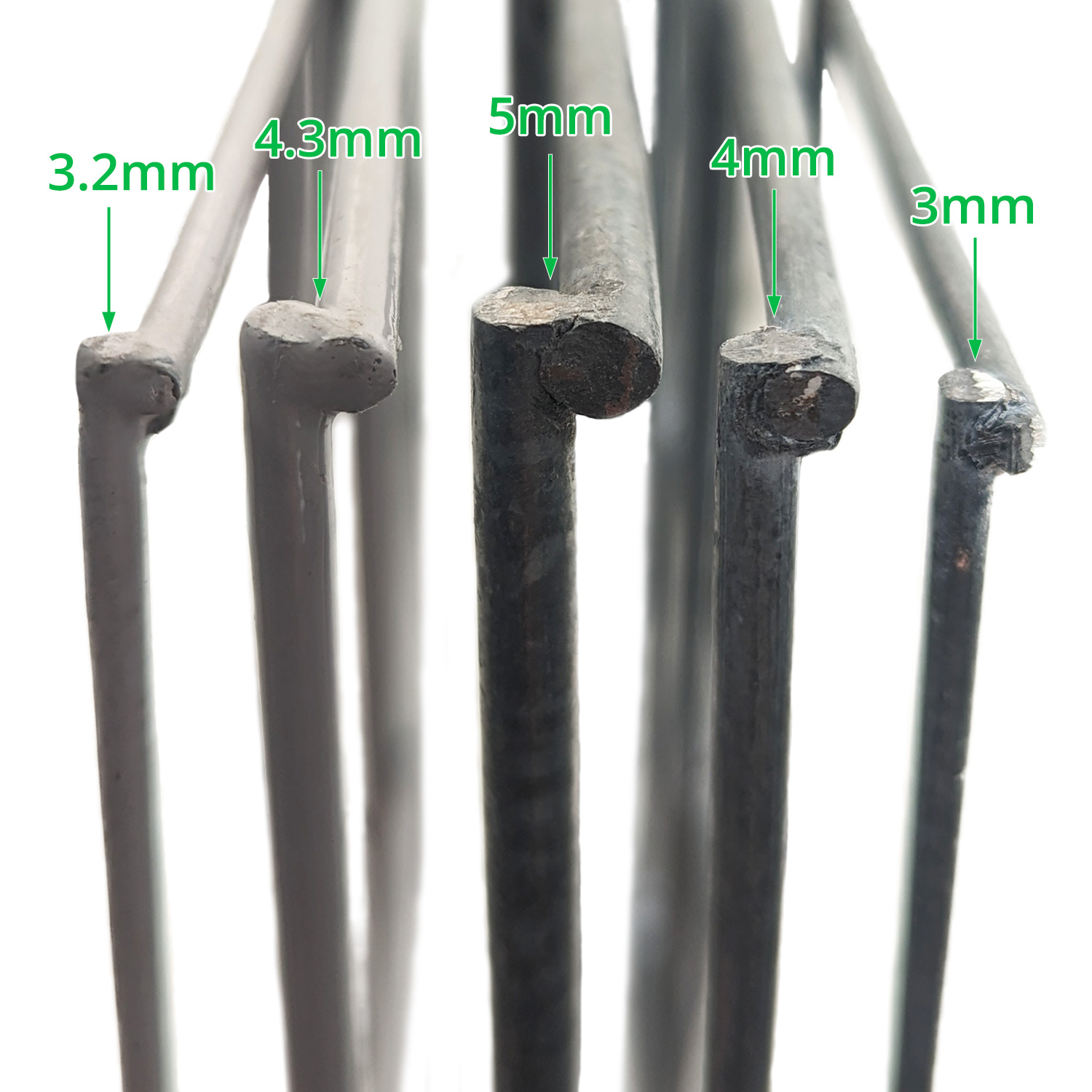
| 3mm | Standard wire thickness for walls up to 5m. Low-cost option. Will result in minor bulges when filled with rocks. Suitable if an architectural, straight edge finish is not required. |
| 4mm | 5m+ high & free-standing walls. Use for seating or surfaces that will be walked on. Will give an architectural, straight edge finish when filled carefully with interlocking rocks. |
| 5mm | 5m+ high walls & free-standing walls. Use for seating or surfaces that will be walked on. Best for an architectural, uniform and precise finish. For use in public parks. Can be used with rounded stone fill. |
| APPLICATIONS & USES | |||||
| Galfan Coated
50-100 yr life ● inland areas |
PVC Coated
50-120 yr life ● coastal |
||||
| Wire diameter | 3mm | 4mm | 5mm | 3.2mm | 4.3mm |
| Hole size | 75mm x 75mm | 75mm x 75mm | 75mm x 75mm | 75mm x 75mm | 75mm x 75mm |
| Cost ££ | Cheapest | +57% | +142% | +31% | +168% |
| Keeps flat edge with angular rocks | Maybe | Maybe | |||
| Keeps flat edge with round rocks | |||||
| Keeps flat edge with light material | – If you fill with lighter materials such as wood, there will be less pressure against the panels, which will reduce bulging. | ||||
| Keeps flat edge with flat material | – If you use materials with a straight edge, such as bricks, there will be very little pressure against the panels, which will prevent bulging | ||||
| Prevent bulging | To help prevent bulging, you can use corner braces, or backfilling panels or bracing wire (free with every order) to brace the panels inwards. | ||||
| Retaining wall (up to 5m) | |||||
| Retaining wall (5m+) | |||||
| Furniture: can be walked on | |||||
| Furniture: can be sat on | |||||
| Fences: tall/thin structures | |||||
| Freestanding wall | |||||
| Planters | |||||
| Public areas | |||||
| Cladding (up to 4m) | |||||
| Cladding (4m+) | |||||
| Erosion control | |||||
| Sea Defence | |||||
| River / reservoir / canal beds | See Gabion Mattress | ||||
| ENVIRONMENTAL, STRENGTH & MANUFACTURING | |
| UK Fabrication |
Burton-on-Trent Factory |
| BBA Certification |
Certificate 05/4215 |
| Design Life & Lifespan | 50 to 120 Years Design Life Compliant with BS EN 10223-8:2013 for structural earth retention systems |
| Environmental Rating |
C1–C4 Inland (Galfan) / C5 Marine (PVC)
Galfan alloy covers rural, urban, and coastal sites; PVC-coated required for direct saltwater exposure |
| Tensile Strength | 540–770 N/mm² High-Tensile Steel Precision electric-welded joints engineered to meet BS EN weld shear strength standards |
| Corrosion Protection |
BS EN 10244-2:2009 (Class A) |
| Mesh Hole Size | 75mm x 75mm Grid Uniform openings prevent rock fill migration or spillage |
| Wire Gauge Tolerances |
BS EN 10218-2:2012 |
| Quality Management | ISO 9001:2015 Certified Manufactured under audited quality management systems for structural consistency |
| Corner Joining |
CT50 Clips, Helicoils, or Lacing Wire |
| View Complete BBA Certificates & Technical Data Sheets | |
| Flat-Pack Assembly | |
| Connecting the corners | The gabion cages arrive flat-packed. The panels are clipped together. All you need to do is attach the corners to complete assembly. Download assembly instructions |
| Lacing wire | Free lacing wire is delivered with all orders.
PRO: it’s free |
| Helicoils | Each cage requires x4 helicoils (one for each corner). Please order separately.
PRO: looks uniform and quick to install |
| CT50 clips | Clips are available in bulk quantities. Advised for use by professionals
PRO: discrete / hidden |
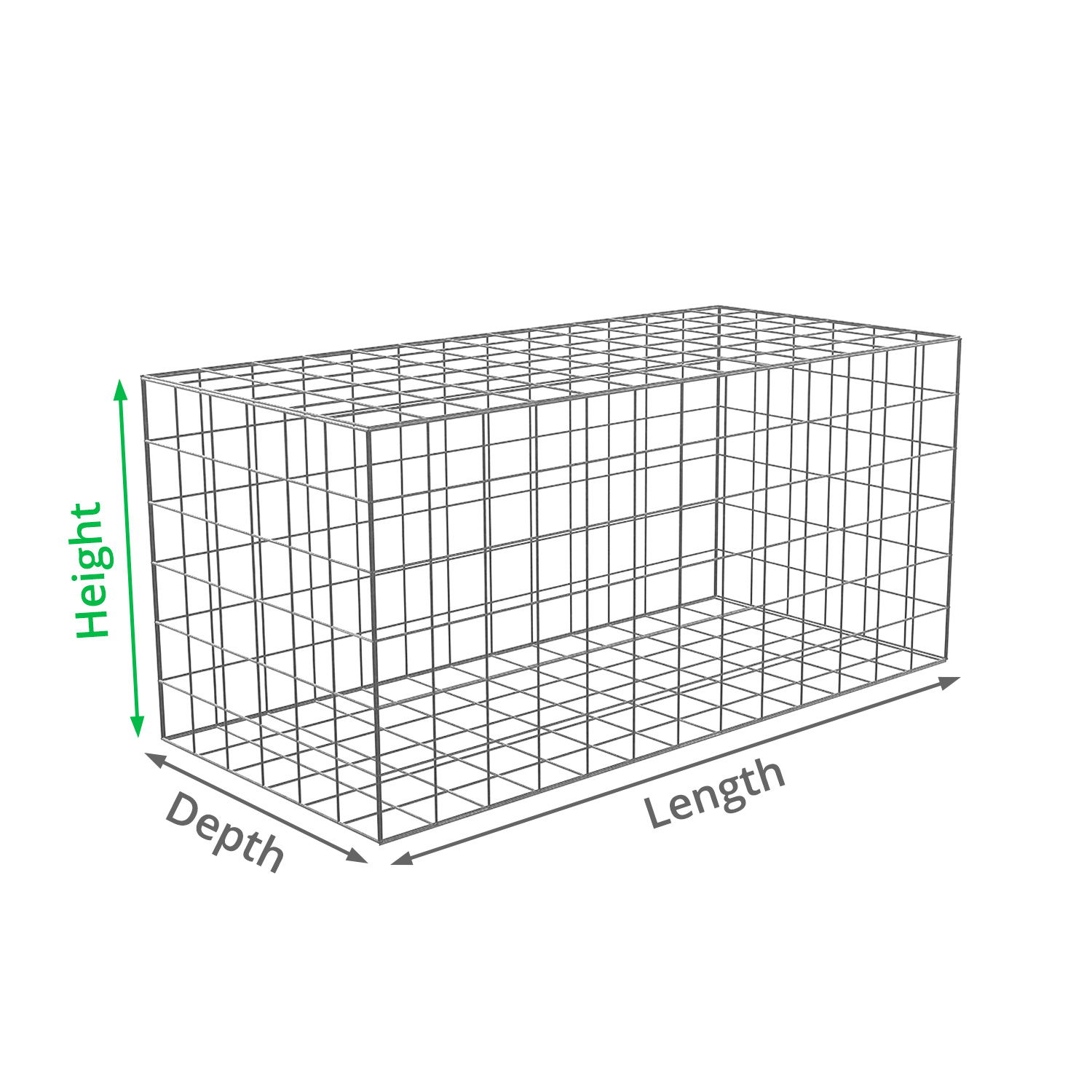
| Basket Dimensions (cm) | Volume (m3) | Stone Bulk Bags Required | Stone Weight Required | ||
| L45 x D45 x H45 | 0.09 | 1 | 164kg | ||
| L97.5 x D45 x H45 | 0.20 | 1 | 197kg | ||
| L97.5 x D97.5 x H45 | 0.42 | 1 | 770kg | ||
| L97.5 x D97.5 x H97.5 | 0.92 | 2 | 1,668kg | ||
| L150 x D45 x H45 | 0.30 | 1 | 546kg | ||
| L150 x D97.5 x H45 | 0.66 | 2 | 1,185kg | ||
| L150 x D97.5 x H97.5 | 1.43 | 3 | 2,567kg | ||
| L202.5 x D45 x H45 | 0.41 | 1 | 738kg | ||
| L202.5 x D97.5 x H45 | 0.89 | 2 | 1,599kg | ||
| L202.5 x D97.5 x H97.5 | 1.93 | 4 | 3,465kg | ||
| Our Baskets BBA-certified & built to British quality standards for long-term use. | Untested Alternatives Untested & mass produced. Will bend or break easier. Short lifespan. |
|
| Expected Lifespan | 50-120 years | Up to 10 years |
| Suitable for small residential projects | ||
| Suitable for retaining walls | ||
| Suitable for public areas | ||
| Holds shape / straight edge finish | ||
| BBA Certification & Testing | ||
| Certified Heavy-Duty Manufacturing | ||
| Fabricate Custom Sizes | ||
| Returns guarantee |
Content Verification & Expert Review
Product specifications and technical guidance on this page have been compiled by customer specialists Joy and Erno, verified by founder John Marlen-Summers, and fact-checked for engineering compliance by Enviromesh
Very easy. No DIY experience is necessary. The cages are delivered flat-packed. To put them together, you simply lift up the corners and attach them using helicoils. It takes approximately 2-5 mins to complete
You will need x4 helicoils so that you can connect the corners. Select x5 if you wish to use a helicoils to close the lid. However, most people use the free lacing wire included with every order to close the lid.
Helicoils are sold in lengths of 1m or 67.5cm. If the height of your cage does not match, you will need to cut the helicoil to size so that it fits correctly.
On every product page, our ‘Frequently Bought Together’ section automatically calculates the essential and time-saving accessories for your cage. Please watch the video below for more info;
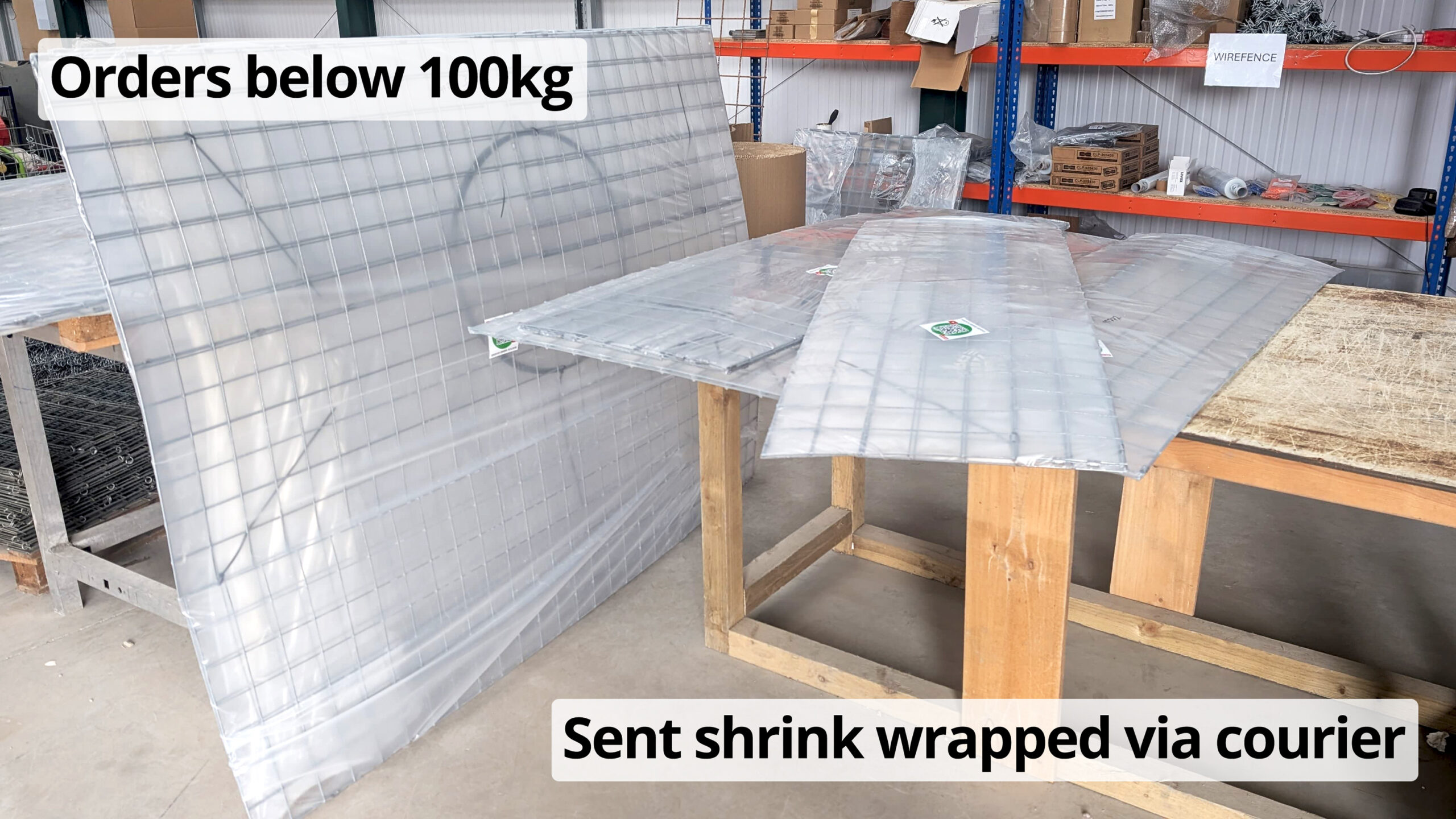
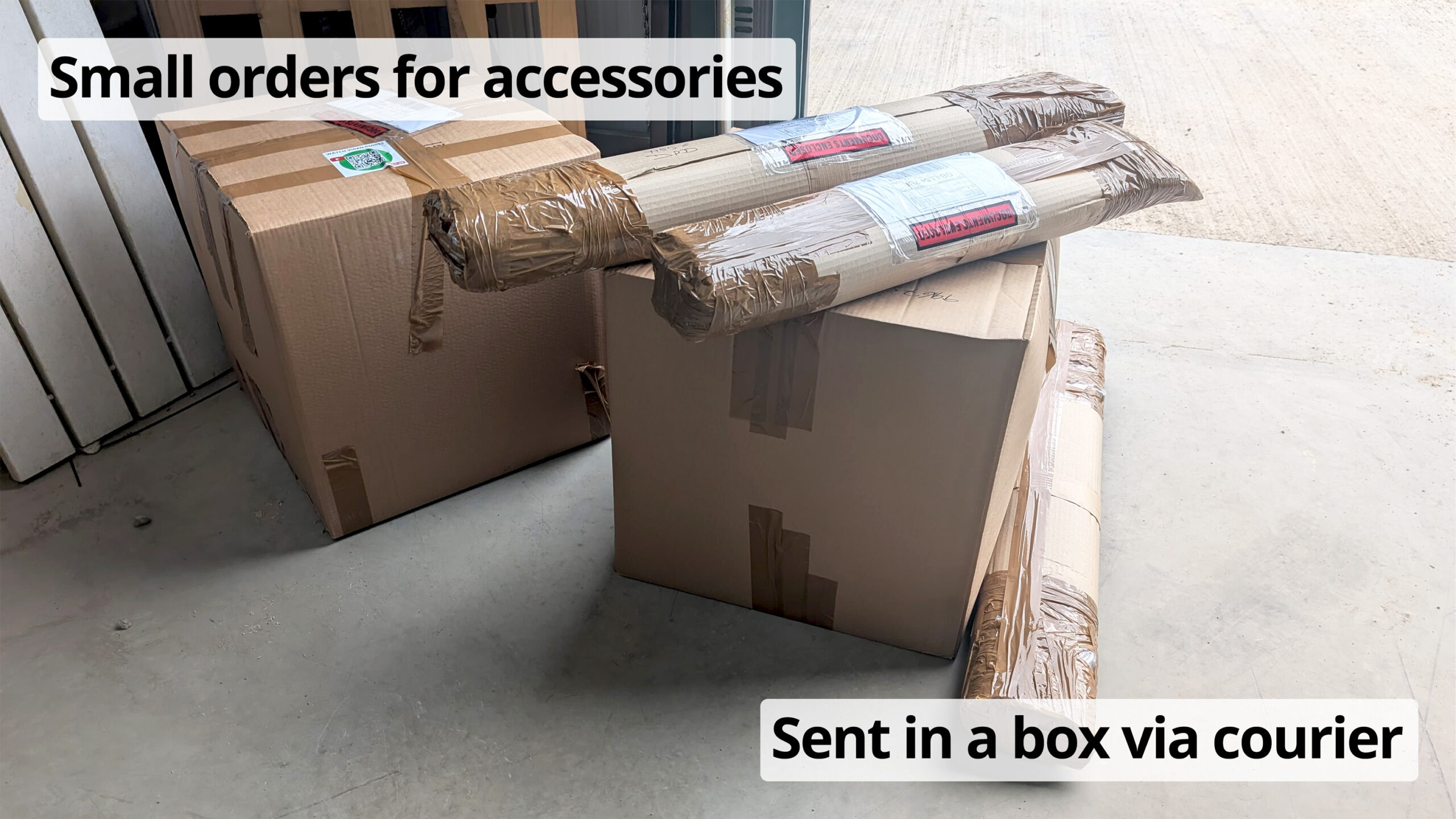
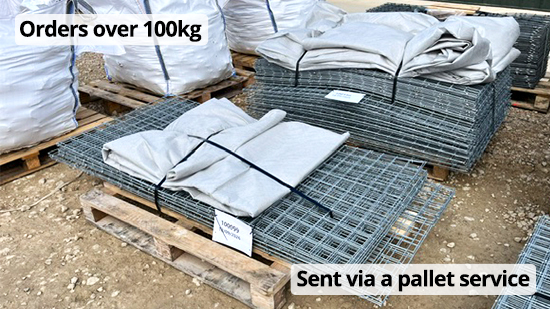
In most cases, orders under 120kg are sent shrink-wrapped and delivered via DX courier service. Orders over 120kg are usually sent on a pallet. We box accessories and smaller purchases and send them via DPD.
Once the order has been picked up from our Burton-on-Trent location, you will recieve email and text notifications from the courier with the scheduled day and time for delivery. For more information, please visit our delivery page
All orders are sent flat-packed. To install, simply remove the wrapping, unfold and connect the corners together. Please find examples of customer parcels in our warehouse waiting for pickup below;
Galfan is an advanced anti-corrosion alloy composition consisting of 95% Zinc, 5% Aluminium, and trace Mischmetal. It is widely referred to as ‘triple life’ wire because its protection layer provides up to 3x the corrosion and abrasion resistance of standard hot-dipped galvanised coatings in coastal and inland environments. Our entire range is manufactured using high-tensile steel wire Galfan-coated to BS EN 10244-2:2009 (Class A) standards, delivering a certified 50–100 year design life.
For more information, please visit our certification and manufacturing page to download our full Galfan Coating Technical Specification PDFs.
In normal environmental conditions, they offer an expected design life of 50 years (Galfan) to 120 years (PVC). The 120-year structural design life is independently verified under BBA Certificate 05/4215 for highways and civil engineering projects, with wire coatings manufactured to British Class A corrosion protection standards (BS EN 10244-2:2009).
Cheaper, uncertified imported alternatives use thinner zinc coatings and weaker welds, resulting in premature rusting, bulging, and a significantly reduced service life.
You will need a Civil Engineer’s calculations if your structure meets the following criteria:
Pro Installation Tip: When building a retaining wall, step or lean the baskets back into the retained slope at a 6°–10° angle (1:10 batter). This uses gravity to resist earth pressure and prevents the wall from leaning forward over time.
If in doubt, we recommend that you double-check your project with a Civil Engineer.
For more detailed information: see our guide to designing and installing a gabion wall
For most garden retaining walls, you do not need a poured concrete base. Gabion baskets are flexible, free-draining structures. Simply dig away loose topsoil down to firm ground, level the area, and lay a compacted 50mm–100mm sub-base of MOT Type 1 or hardcore to stop the baskets settling unevenly over time. See our guide to building gabion walls for detailed information.
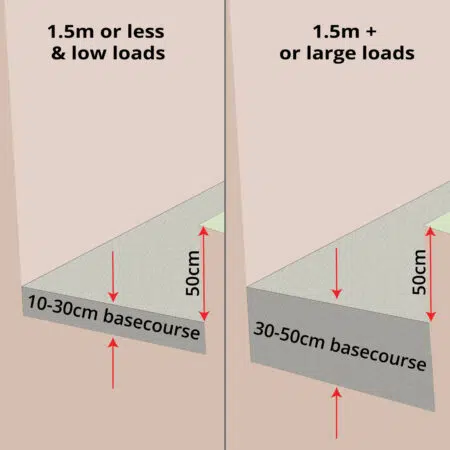
If your wall is retaining heavy loads such as property or roads, or you have a lot of groundwater or large sloping earth behind the wall, you should consult an engineer.
Yes. A popular cost-saving method is “face-packing”: hand-stack attractive, angular stone along the visible front face, then backfill the interior and rear with recycled concrete or crushed brick rubble. Ensure all fill material is larger than the 75x75mm mesh aperture or place smaller rubble into porous rubble bags.
Both running bond (staggered like brickwork) and in-line (stack bond) layouts create strong, long-lasting walls. You can choose either option depending on the look you want to achieve:
Compliance & Quality Note: Our baskets are manufactured to BS EN 10223-8 standards and backed by independent BBA Certification (05/4215) for mesh strength and long-term durability. For standard garden retaining walls and freestanding structures up to 2 meters high, either stacking method provides complete stability when properly filled and braced. For commercial walls over 2 meters or steep bankings, follow your structural engineer’s site plans.
Declarations of Conformity are available upon request. Please contact [email protected]
Asssemble using helicoils
Asssemble using lacing wire
Asssemble using clips
Helicoils vs lacing wire vs clips
How many helicoils do I need?
Prevent bulging using corner braces
Prevent bulging with lacing wire
Prevent bulging & save money with stone seperating panels
Retaining wall installation
Freestanding wall installation
Curved gabion installation
Planter installation
Cladding installation
Step installation
BBQ installation
Table installation
Bin store installation
Trellis wall installation
Water feature installation
Attach a wood bench top
Installing a fence
BBA Certificate
ISO 9001:2015 Quality Management Certificate (Shared Facility)
Galfan coating specification
PVC coating specification
Compare 3mm, 4mm and 5mm
Tour our warehouse in Burton-On-Trent
Watch our team fabricating & assembling
How to save money filling
Hand filling
Machine filling



Wire Fence is part of the Super Magic Bean group - VAT Registered: 344 7643 83 - Company Registration No: 11290483