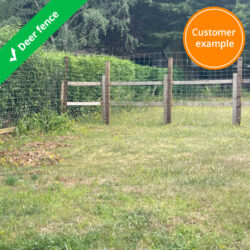
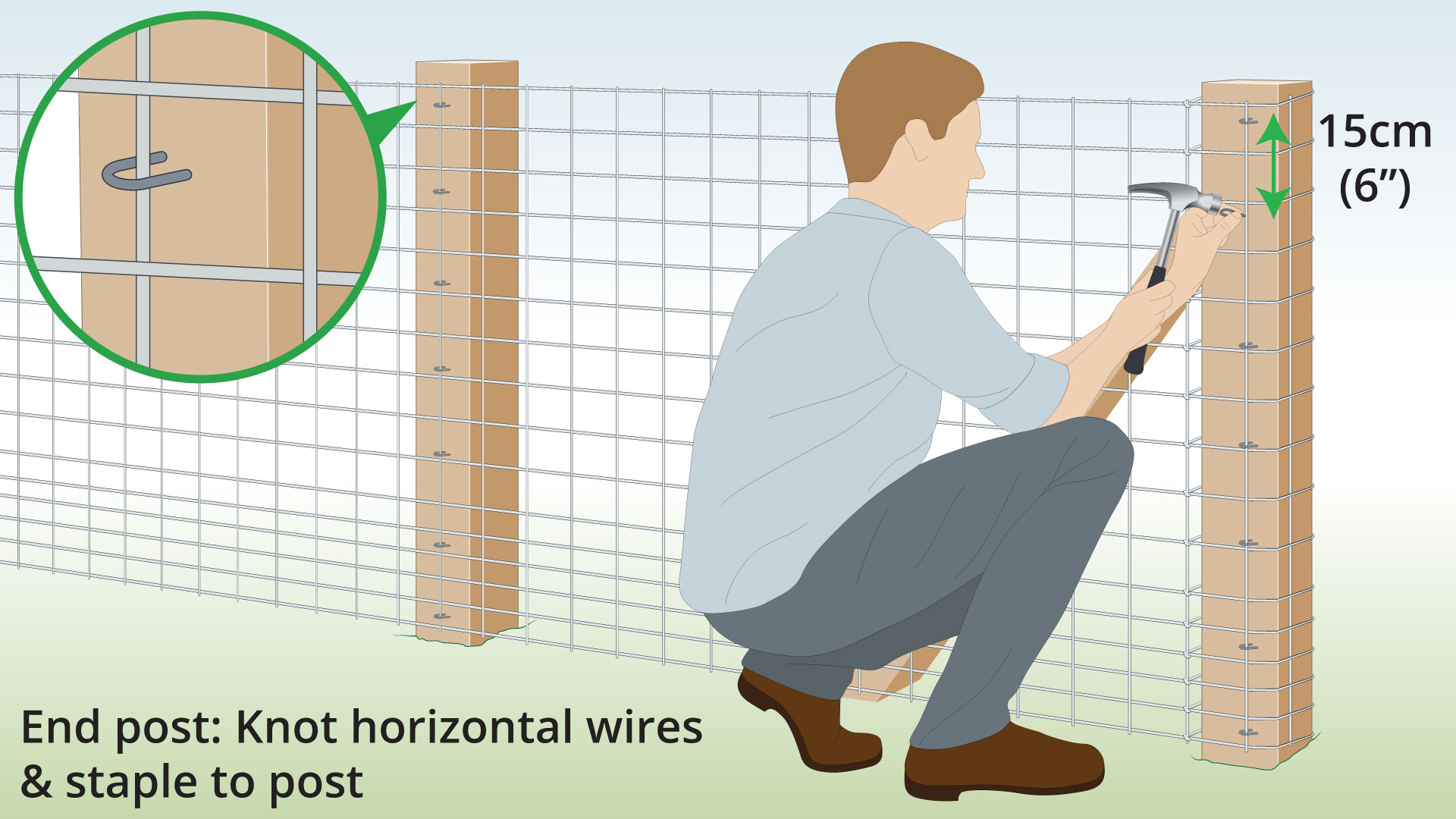
Batten the mesh to the posts: fix between the post and another piece of treated timber of the same length
Additional Support
Use galvanised line wire for added support between the posts, as netting is more flexible than wire mesh
At ground level
Some deer may try to push through under the fence. To prevent this keep enough mesh to create a lip along the base of the fence which can be pegged / staked down
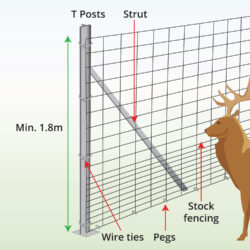
with T Posts
with Wood Posts
To Do
Explanation
Completed Installation
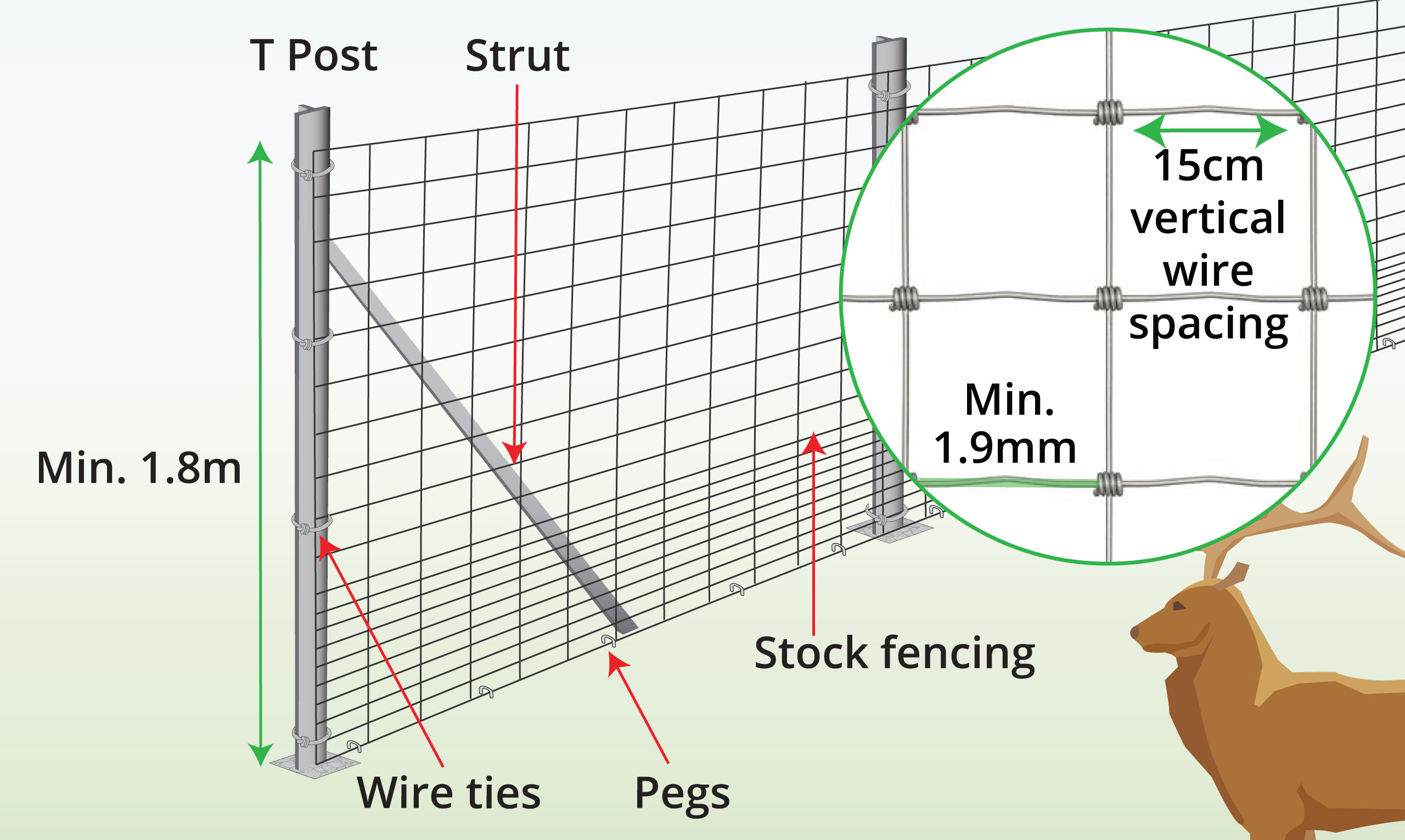
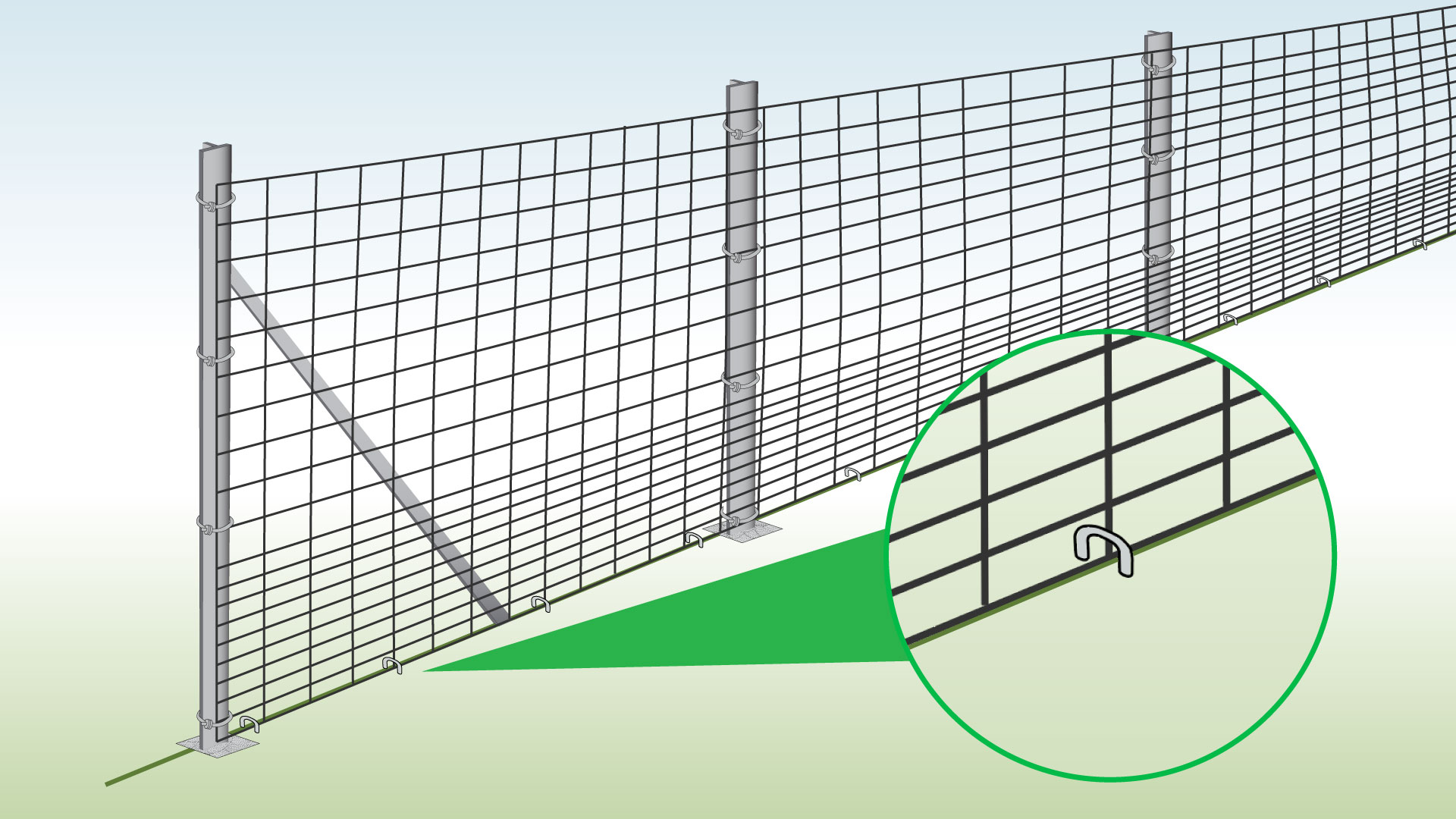
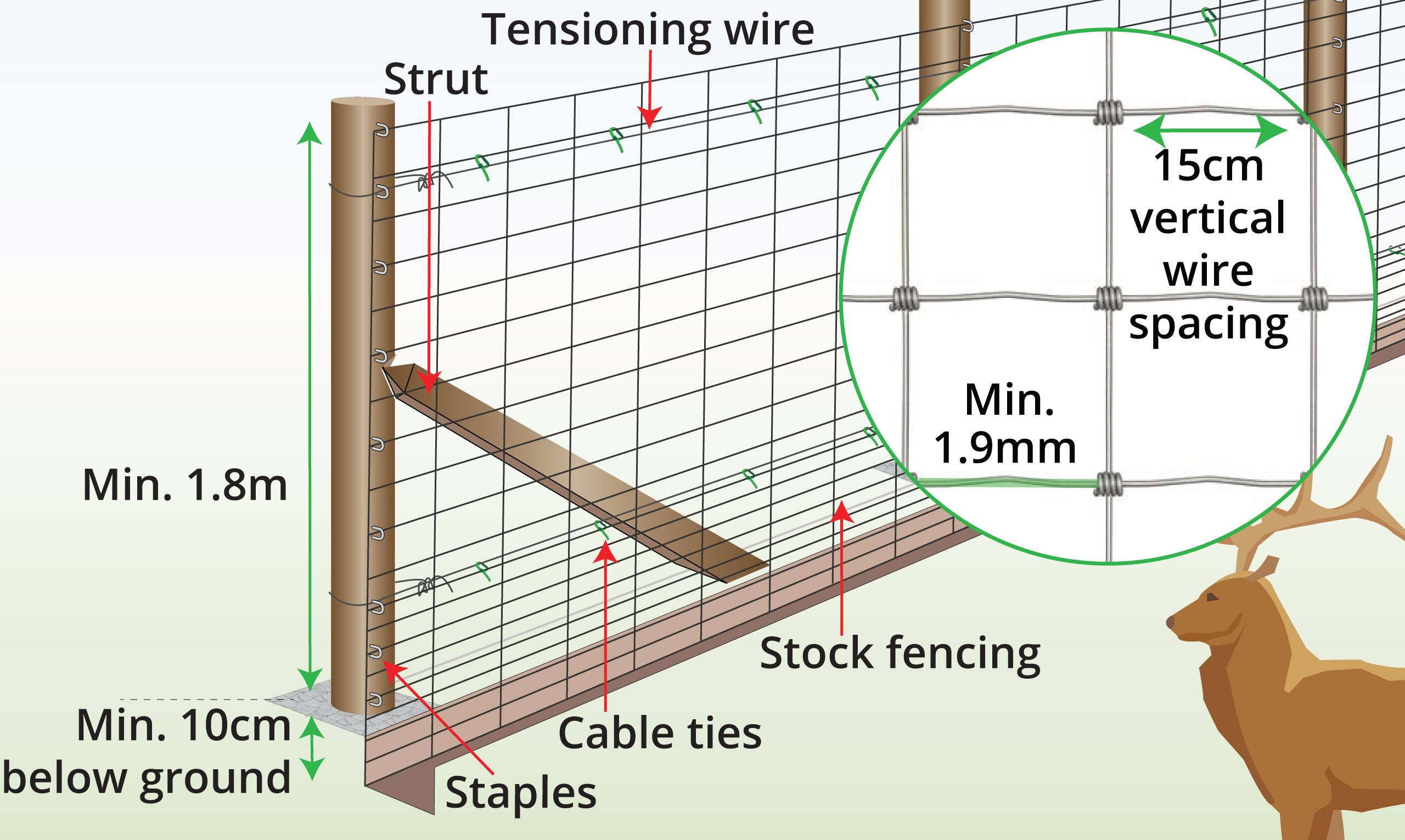
Set t posts 2–3 m apart, reinforcing the end posts with struts, then attach the deer fence stretching it tight. Then secure the bottom with pegs every 1–2 m to stop deer pushing under.
Full instructions below or watch this video
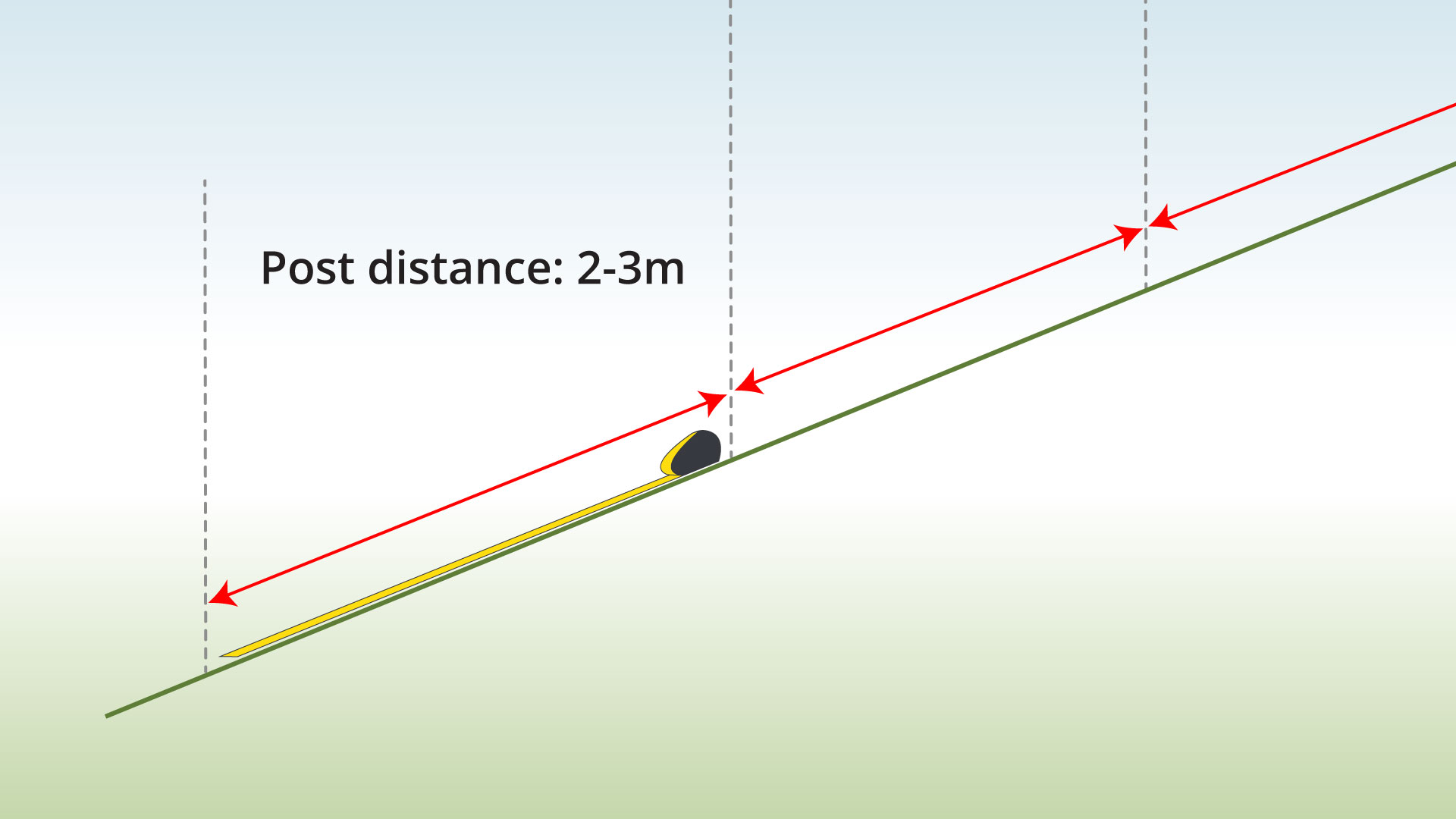
Step 1 – Measure Distance between Posts
Mark where the posts will go, leaving about 2-3 m between them.
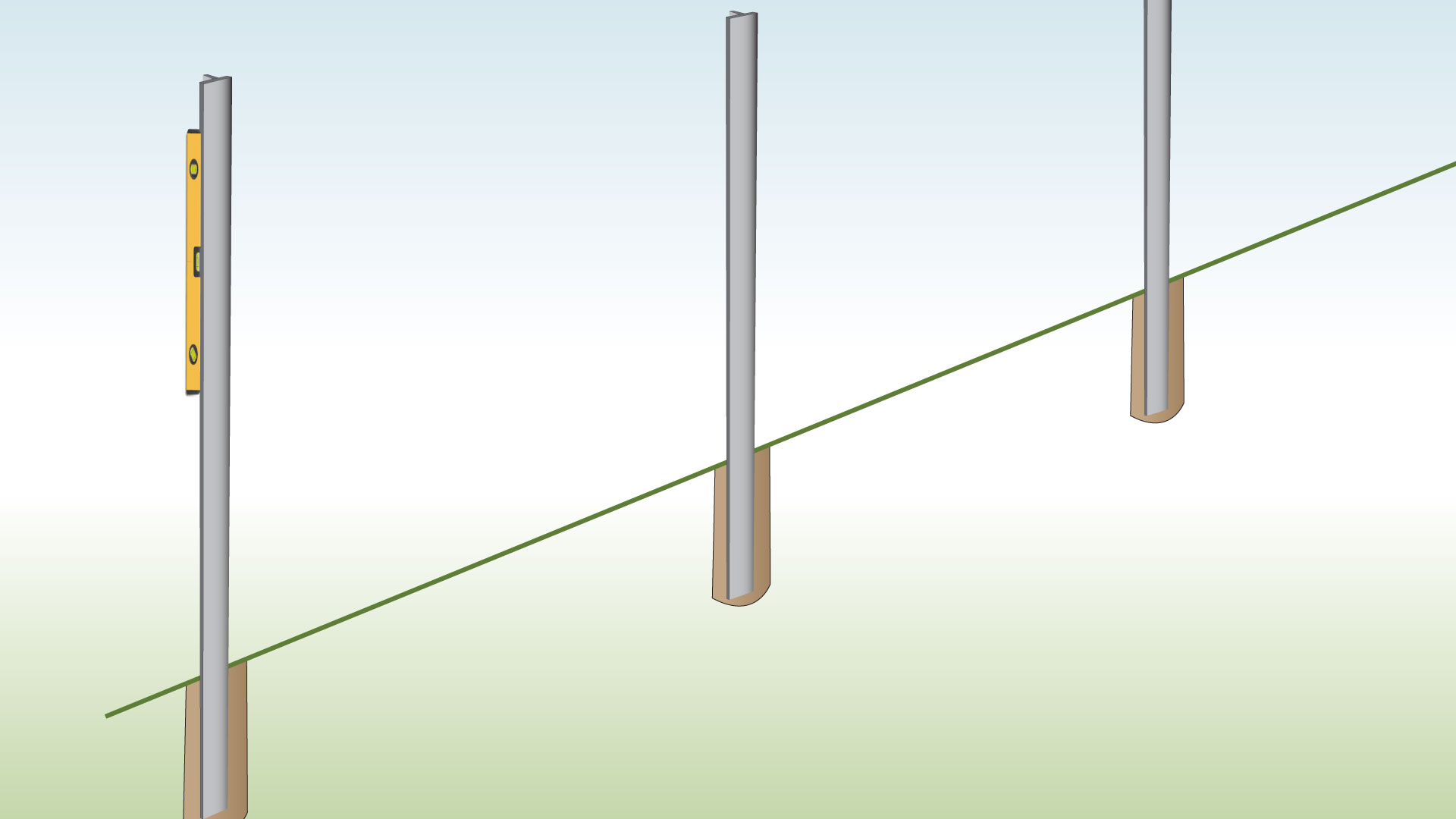
Step 2 – Dig the Holes
Dig the holes and put the posts in place, keeping the flat sides facing outwards.
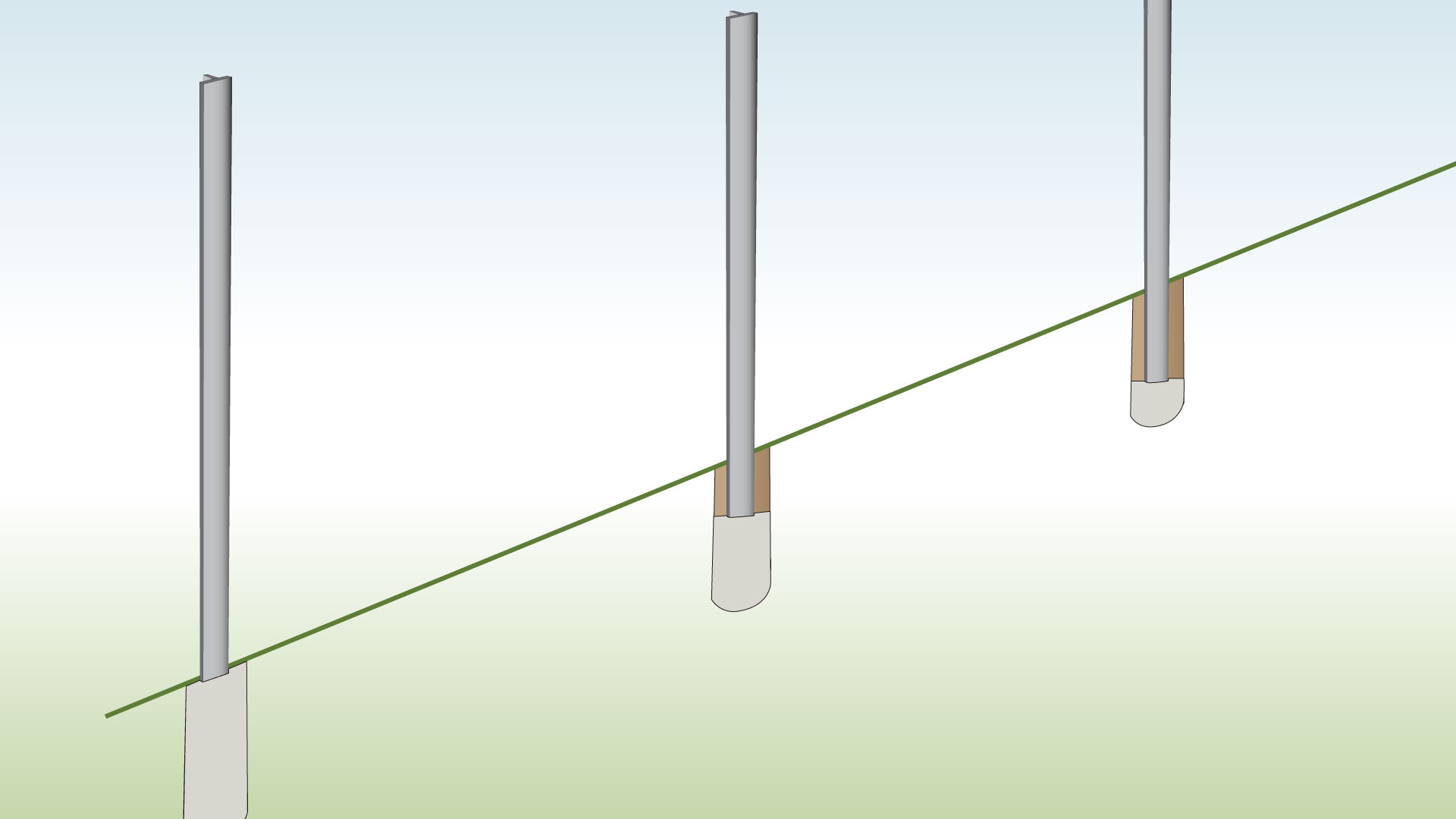
Step 3 – Set Them in Concrete
Set the posts in concrete so they stay steady.
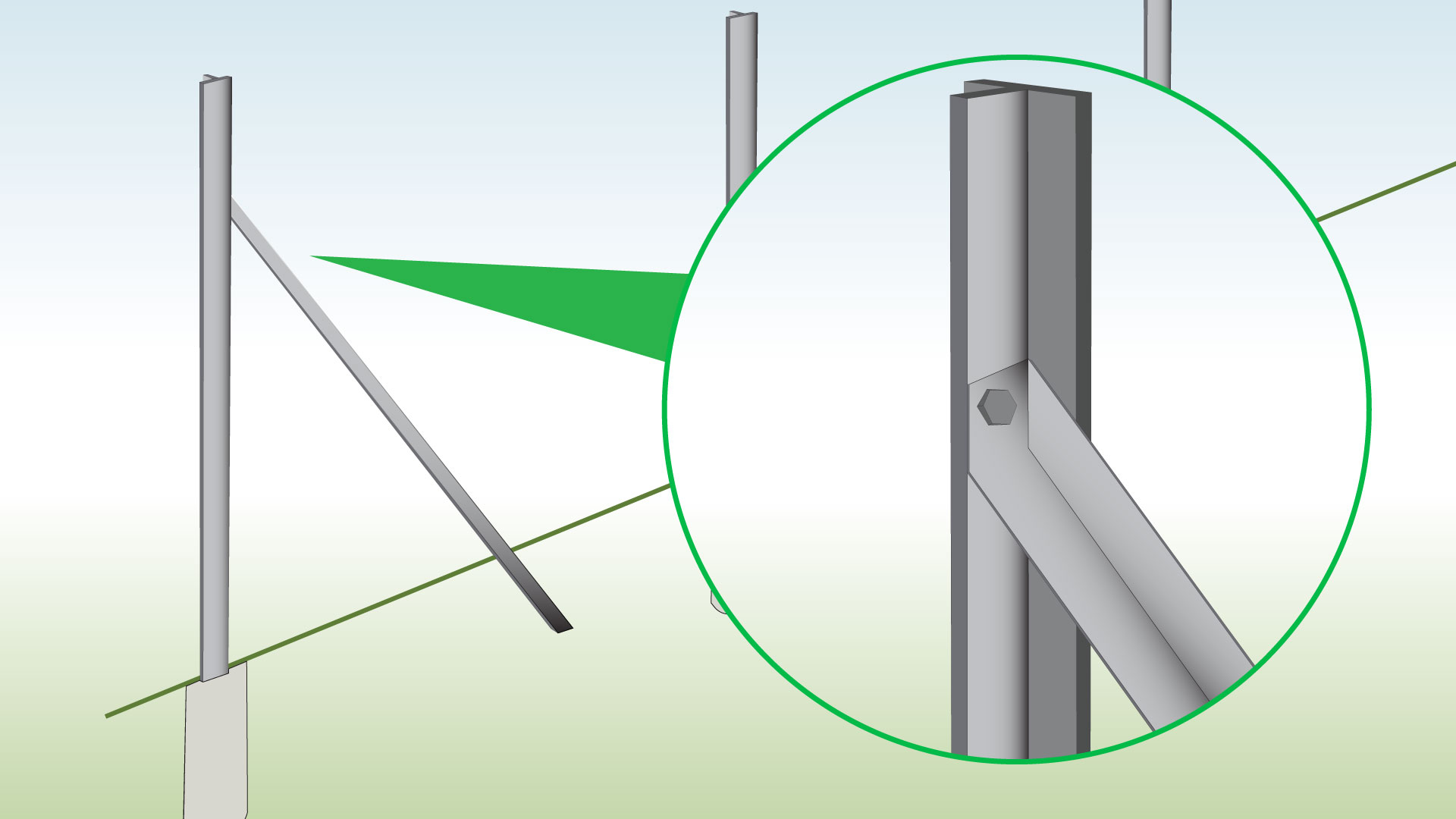
Step 4 – Install Reinforcement Struts
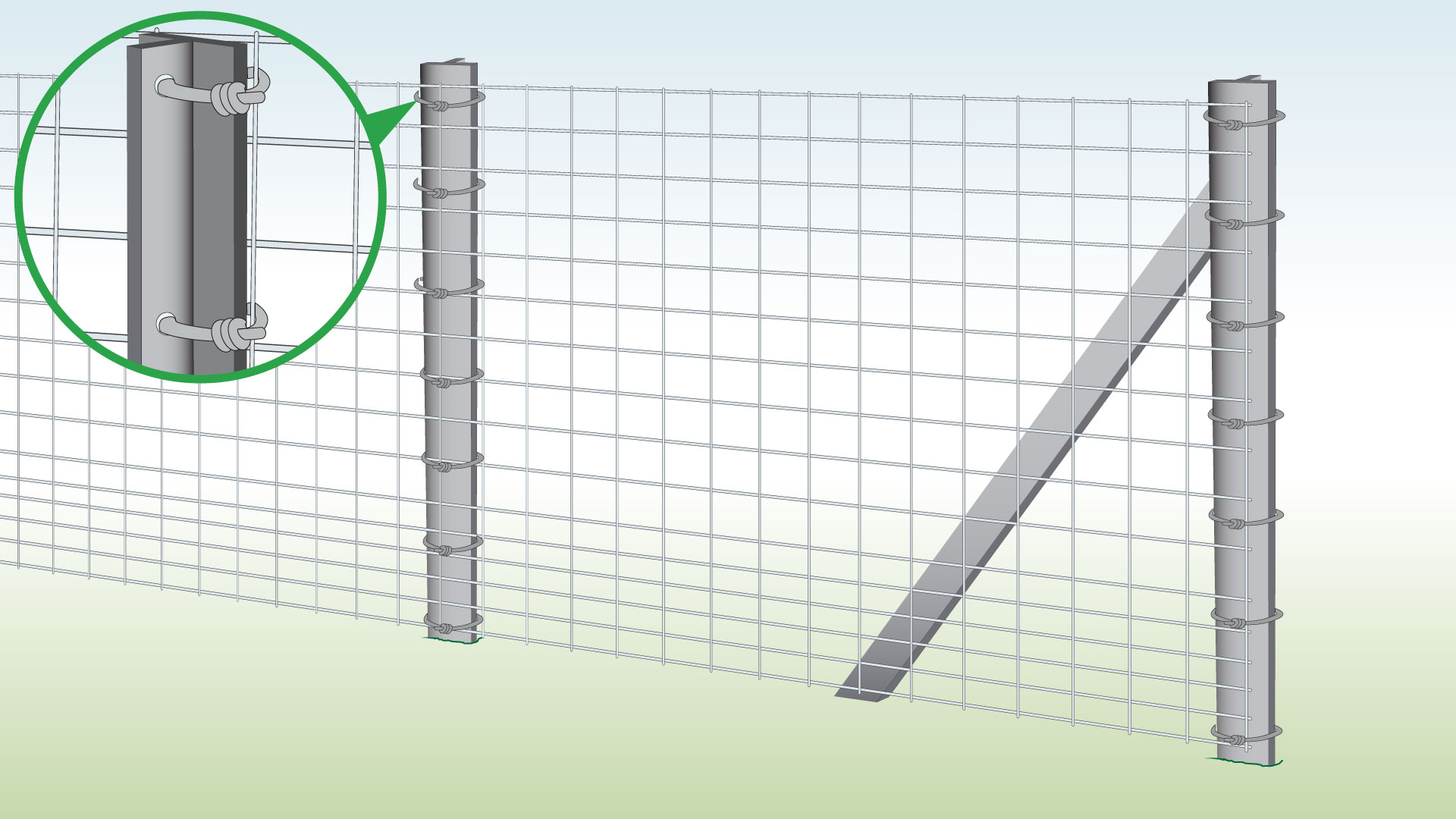
Fit the reinforcement strut by matching its hole with the second hole from the top of the T post.
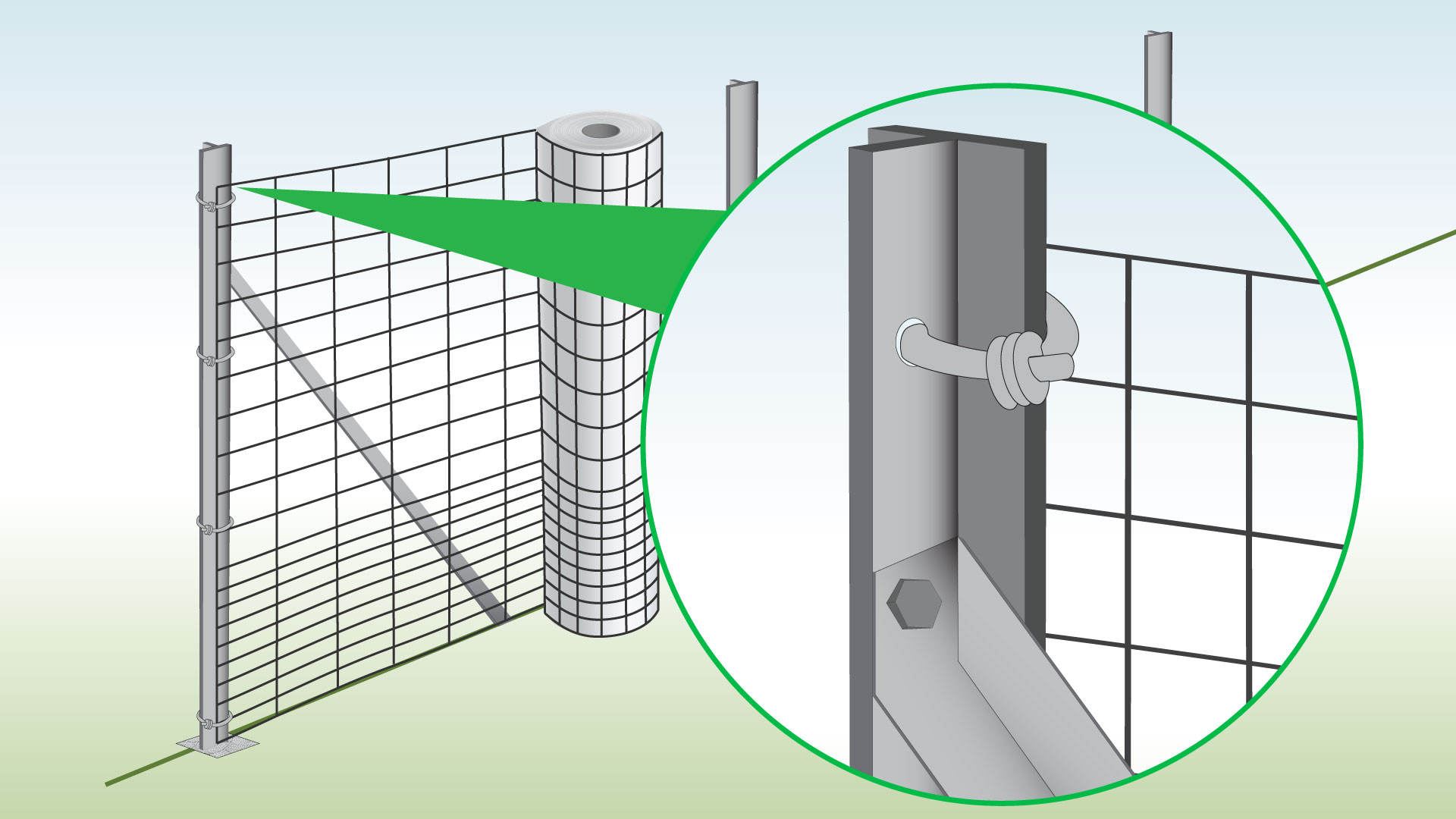
Step 5 – Secure Fencing to Post
Secure the stock fencing to the first post using wire ties.
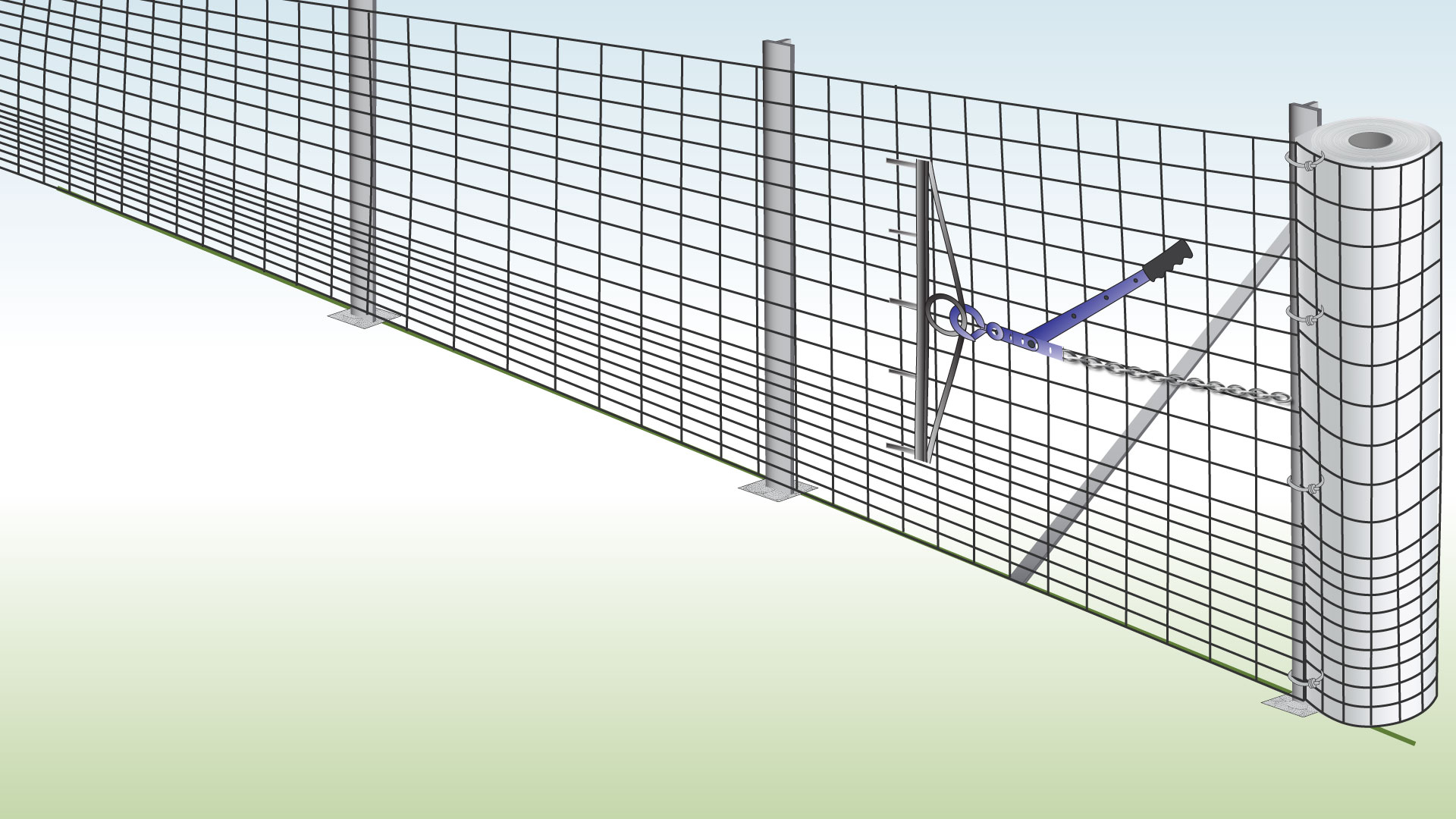
Step 6 – Pull it Tight
Unroll it to the other end, keeping it tight between the two end posts.
Cut off any extra fencing, and attach it to the post in the same way as before, then release the tension.
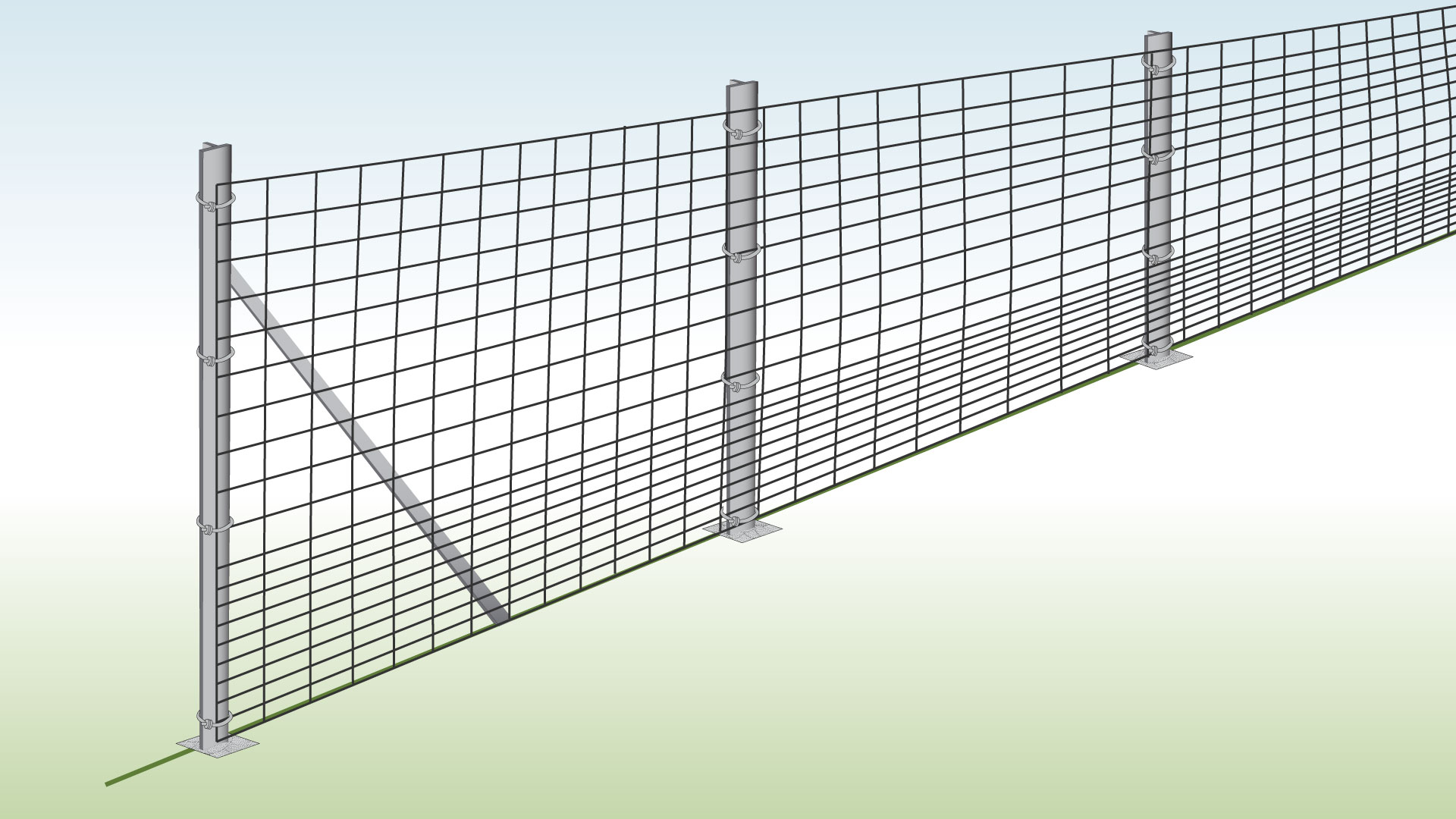
Step 7 – Secure to Middle Posts
Fasten the fence to the middle posts using wire ties.
Step 8– Secure to Ground with Pegs
Finally, peg the bottom of the fence to the ground every 1-2 m to stop deers from pushing underneath.
To Do
Explanation
Completed Installation
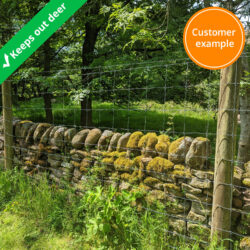
Use this setup to create a deer proof fence.
Properties
Property
Description
Material
Hot dip galvanised steel
Characteristics
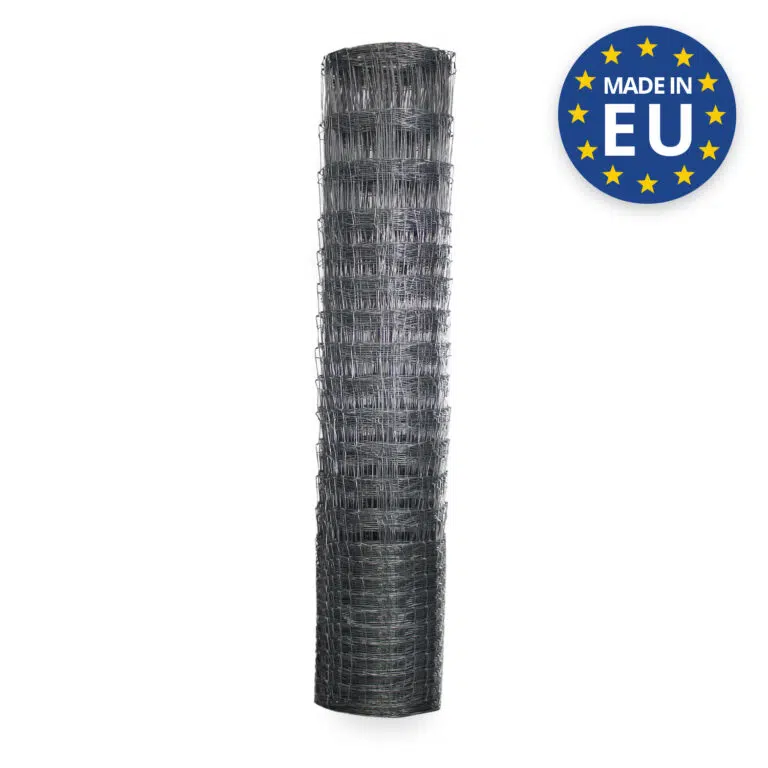
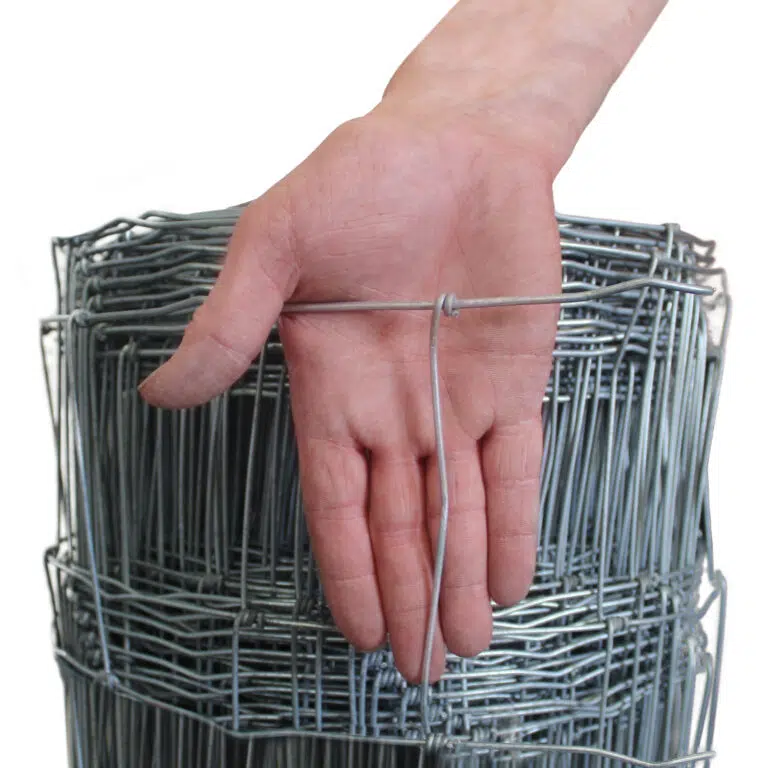
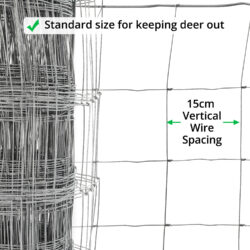
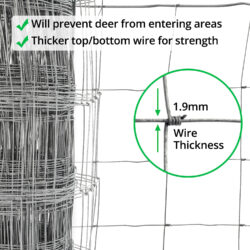
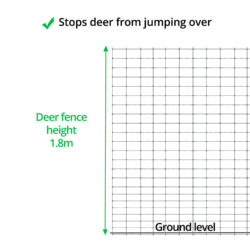
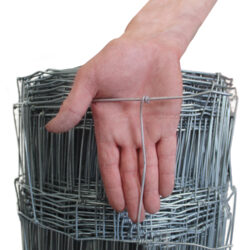
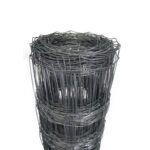
Hinge joint knot, 13 x horizontal line wires at differing heights & 15cm vertical spacing for strength. Low maintenance
Appearance
Silver / metallic colour
Hole Size
Multiple aperture sizes, starting with smallest at base and getting larger towards the top
Resistance
High level of corrosion, rust and weather resistance
Handling
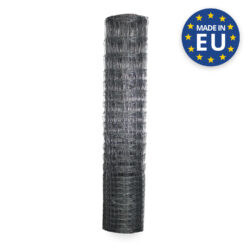
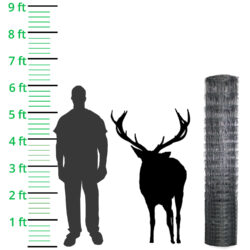
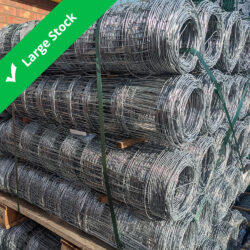
Delivered as a roll. Cut with wire cutters. Requires less posts (typically every 5-9 metres) and less maintenance than mild steel fencing.